Smoking wood on the barbecue: chips or chunks? How to use smoke without overpowering your food
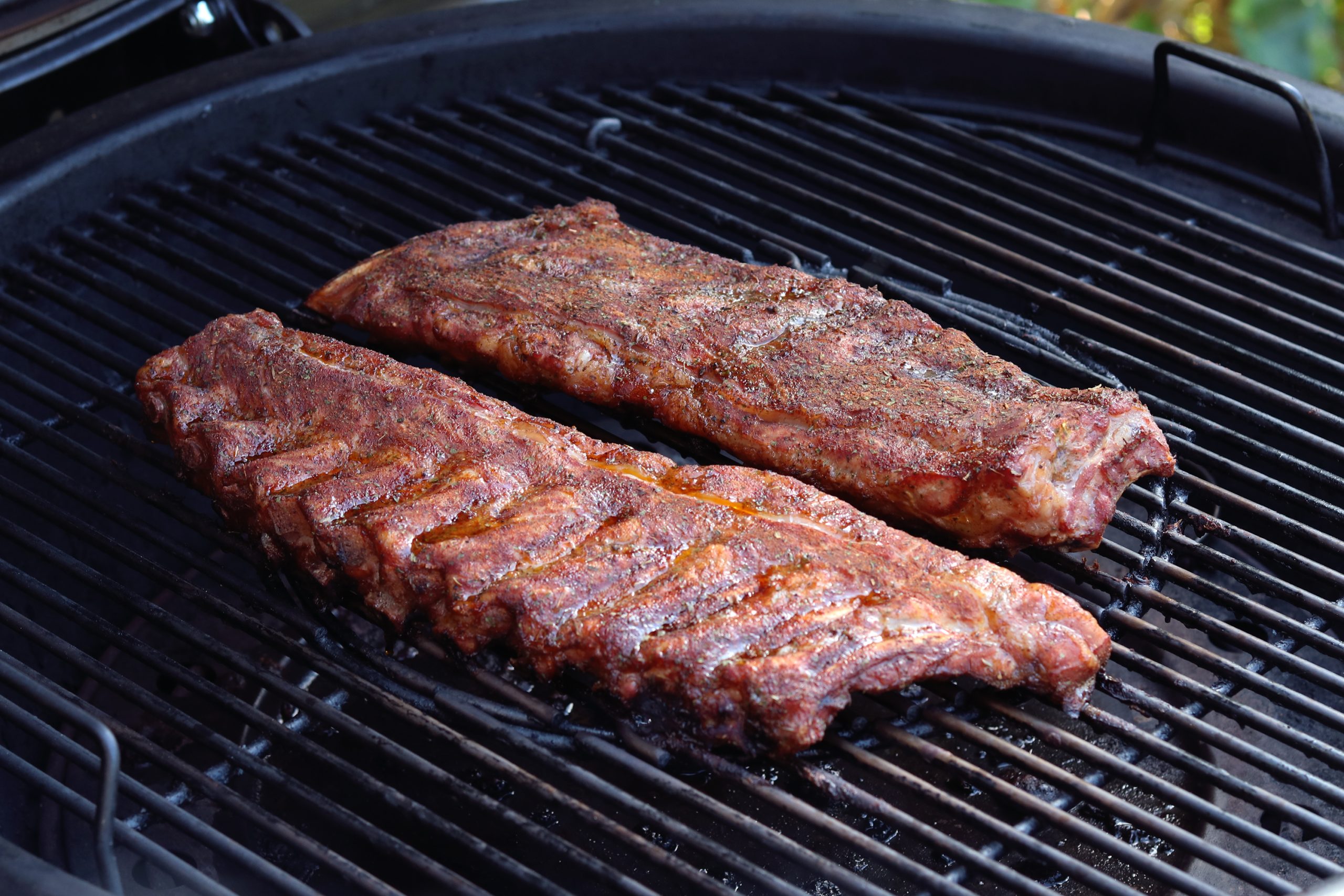
Smoke is what distinguishes barbecuing from simple grilling. It adds aroma, depth and character. But smoke is also the most misused element of outdoor cooking.

Too much smoke. The wrong type of wood. The wrong moment.

Those who understand smoke add a new dimension of flavour. Those who misuse smoke lose balance and end up with a bitter aftertaste. In this blog, you will learn exactly:

  • What smoke does to your dish.
  • The difference between smoke chunks and smoke chips.
  • Which type of wood suits which type of meat.
    Welke houtsoort past bij welk type vlees.
  • Timing: When to add smoking wood and when not to.
What does smoking wood actually do to your dish?

When smoking wood burns, aromatic compounds are released that adhere to the surface of your product. This happens mainly in the first phase of preparation, when the surface of the meat is still cool and slightly moist.

Remember these three rules of thumb:

  • The start is crucial: Most of the smoke absorption happens at the beginning.
  • Long sessions: Adding extra smoke later often has little effect on the flavour.
  • Clean combustion is sacred: Thin, light blue smoke is what you want. Thick, white smoke indicates incomplete combustion and gives your food an unpleasant, bitter taste.

Our tip: Always work with a stable fire and glowing coals before adding smoking wood.

Smoke chunks or smoke chips: what is the difference?
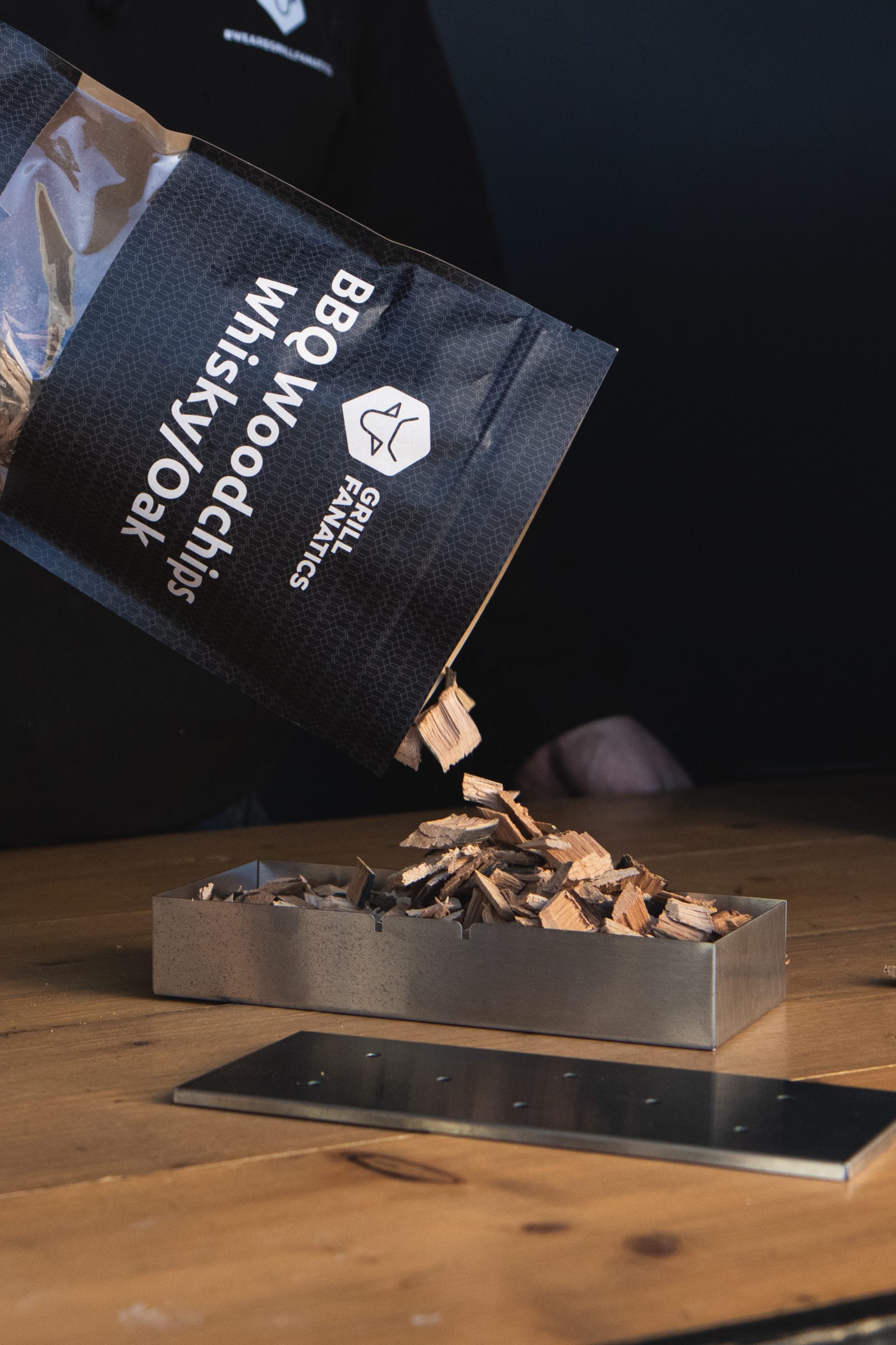
The shape of your smoking wood determines the intensity and duration of the smoke release.

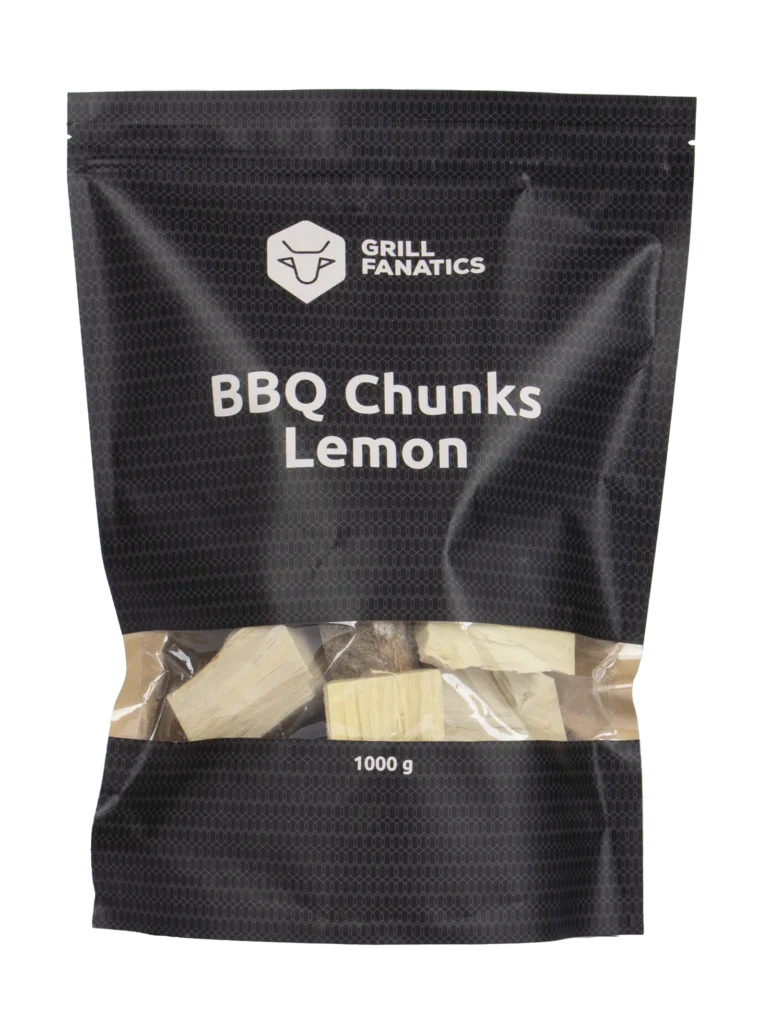
Smoke chunks, for long cooking times

Chunks are larger blocks of wood that burn slowly. They are ideal for low & slow sessions such as brisket, pulled pork or lamb shoulder.

  • Properties: Long smoke release and gradual flavour build-up.
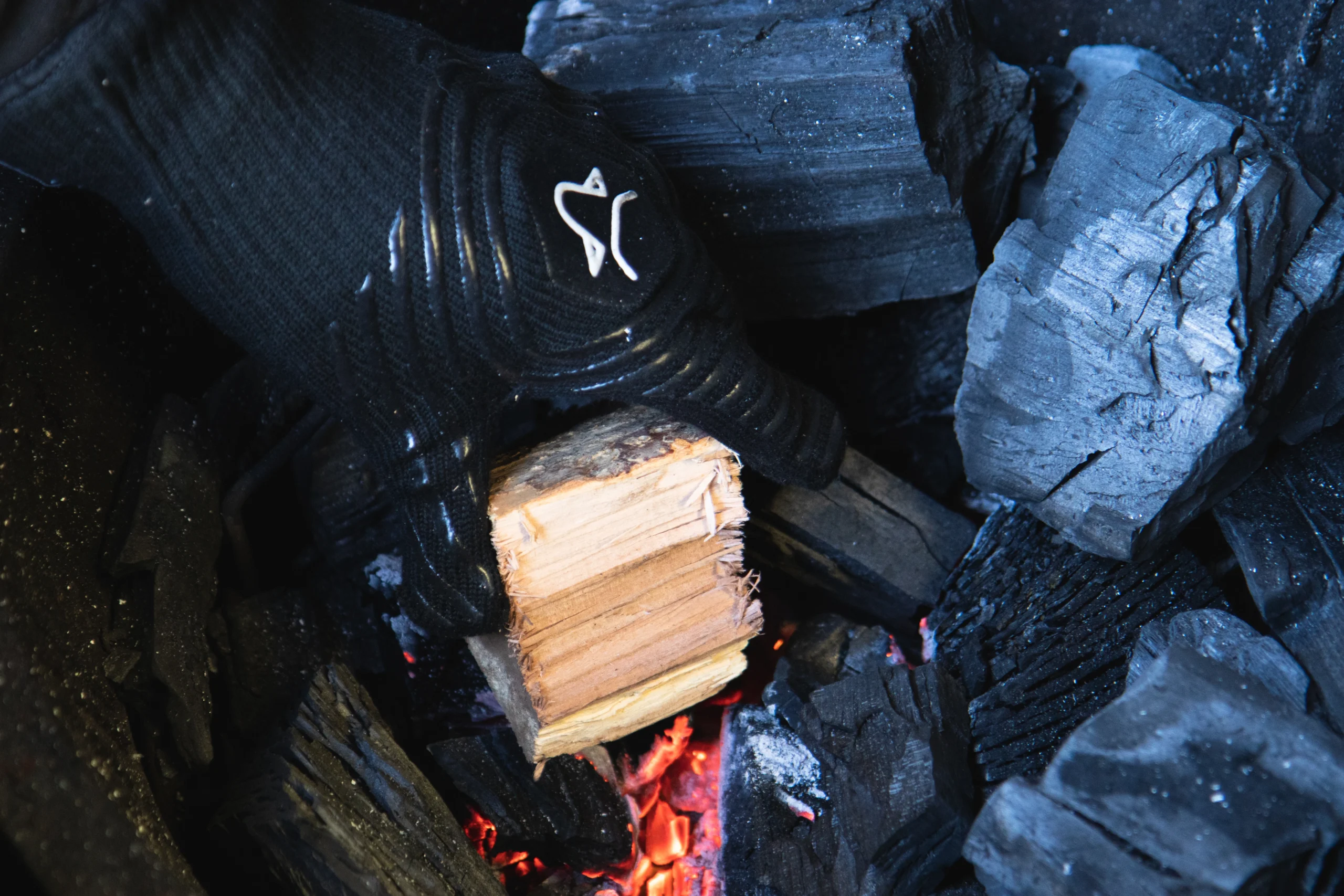
  • Use: Place 1 or 2 chunks directly between or on top of your glowing charcoal.

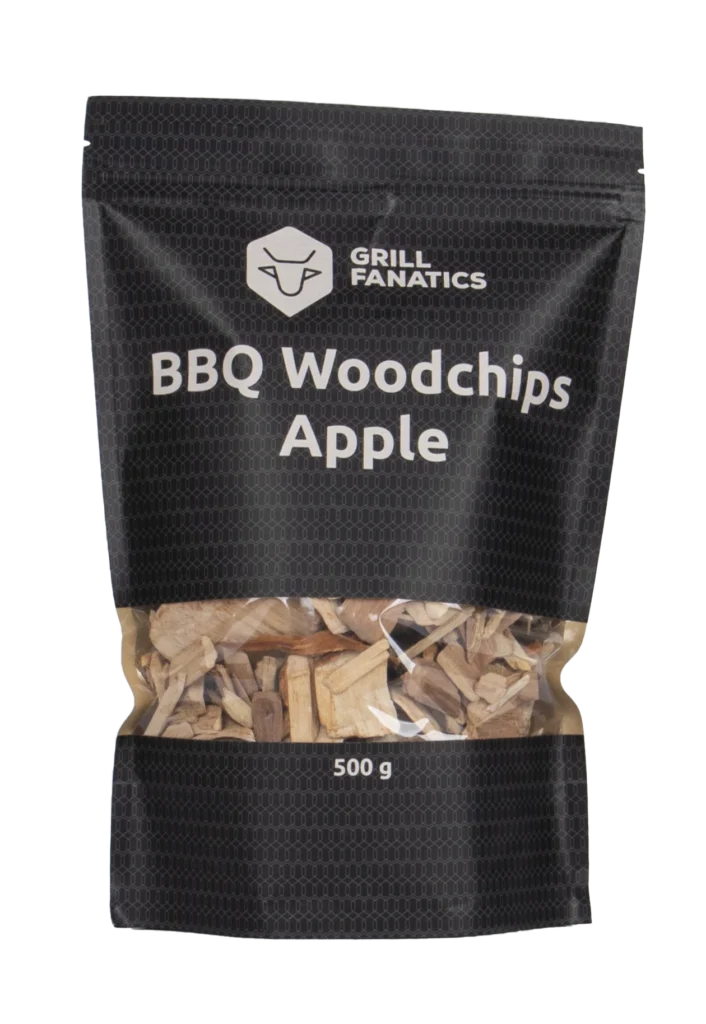
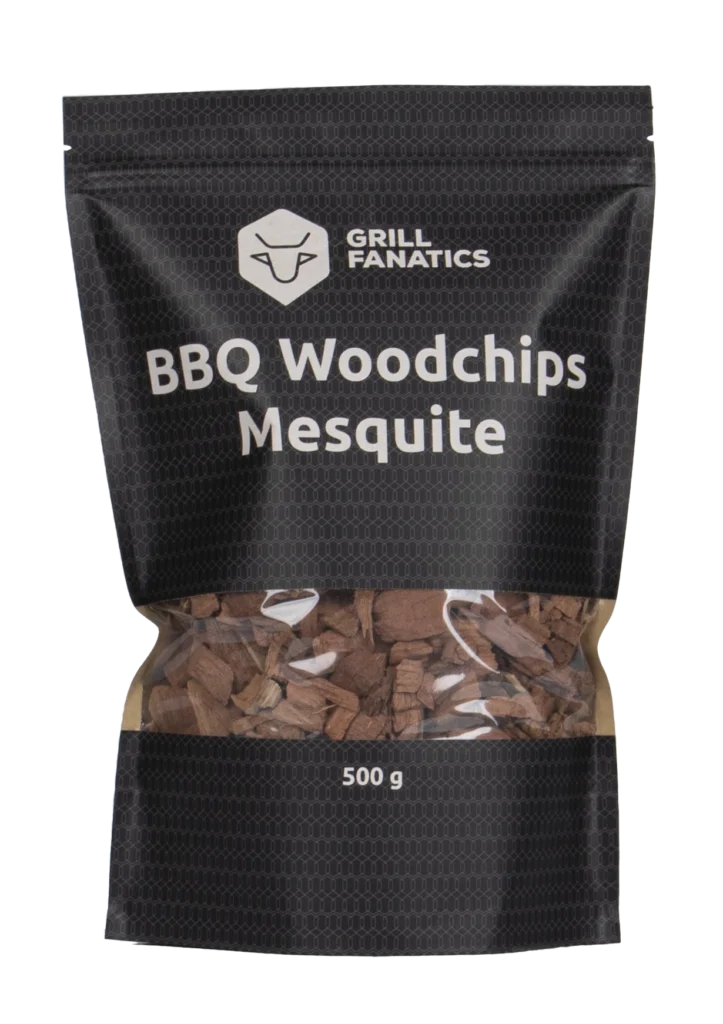
Smoke chips, for a quick flavour boost

Chips (houtsnippers) zijn kleiner en dunner, waardoor ze direct rook afgeven. Perfect voor kortere sessies met vis, kip of groenten.

  • Properties: Rapid smoke development and shorter burning time.
  • Important: Do not soak smoke chips in water. Wet wood first produces steam, which lowers the temperature in your barbecue and produces impure smoke. Dry wood on a stable fire gives the cleanest flavour. Place the smoke chips in a smoke box and then between the coals.

An odd one out: Smoking dust

In addition to chunks and chips, there is also smoking dust. Although the flavours often correspond to those of chips or chunks, the application is completely different.

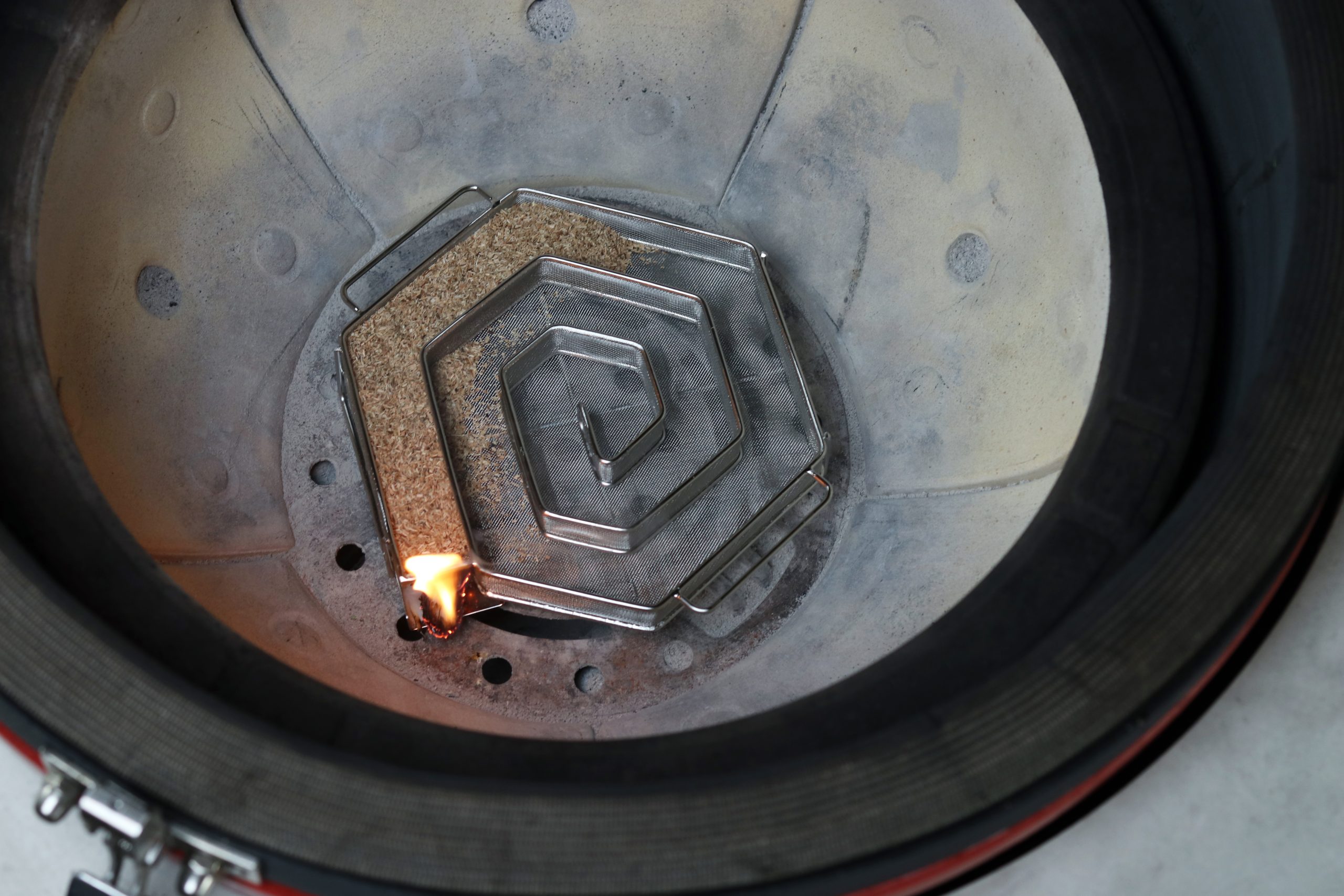
Smoking dust is not intended to be thrown directly onto burning charcoal. It has been specially developed for cold smoking. This is a technique whereby dishes such as salmon, cheese or salt are given a mild smoky flavour over a long period of time, without the product being cooked (often at temperatures below 25°C). A cold smoke generator is used for this.

Because cold smoking is a craft in its own right with its own rules and accessories (such as the Cold Smoke Generator), we will not go into further detail in this blog.

Want to know more about cold smoking? We have written an extensive special about how to get started safely and effectively with smoke dust. Read the blog about cold smoking here.

When should you use smoking wood (and when should you not)?
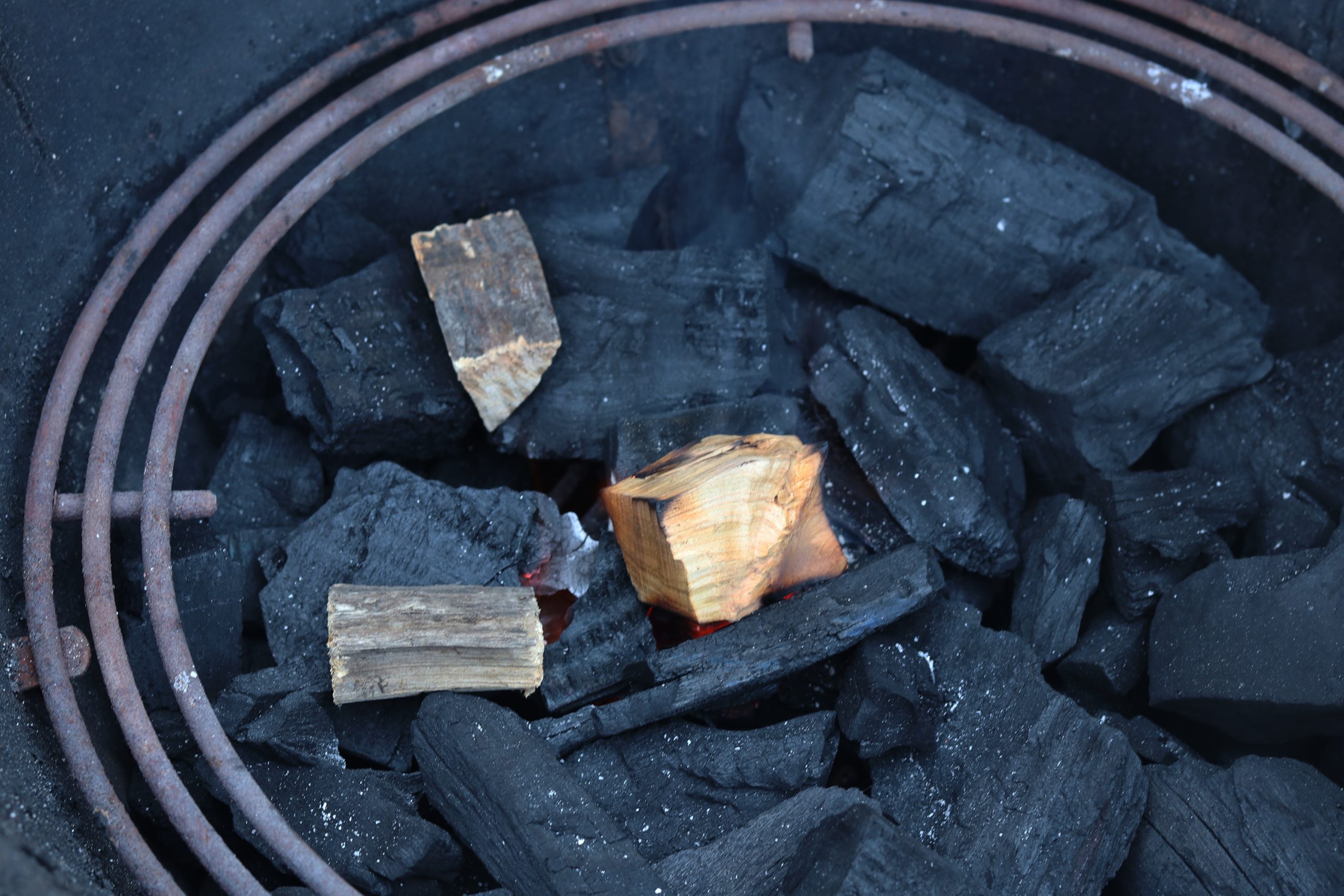
More smoke does not automatically mean more flavour; it often means less balance.

Use smoking wood for:

  • Indirect grilling and low & slow cooking.
  • The first phase of a reverse sear.
  • When you want to add layers to your flavour profile.

Skip smoking wood for:

  • Grilling directly over extremely high heat (it burns too quickly and becomes bitter).
  • Dishes that already have a strong grilled flavour.
  • When you want to let the refined flavour of high-quality charcoal speak for itself.

How much smoking wood do you need?

Voor een kamado (maat L) is dit een goede richtlijn:

  • Low & slow: 1 to 2 chunks are often enough for a full session.
  • Subtle accent: A small handful of smoke chips for a short session.

Always start with less than you think you need. Smoke should support your dish, not dominate it.

Which flavour suits your dish?

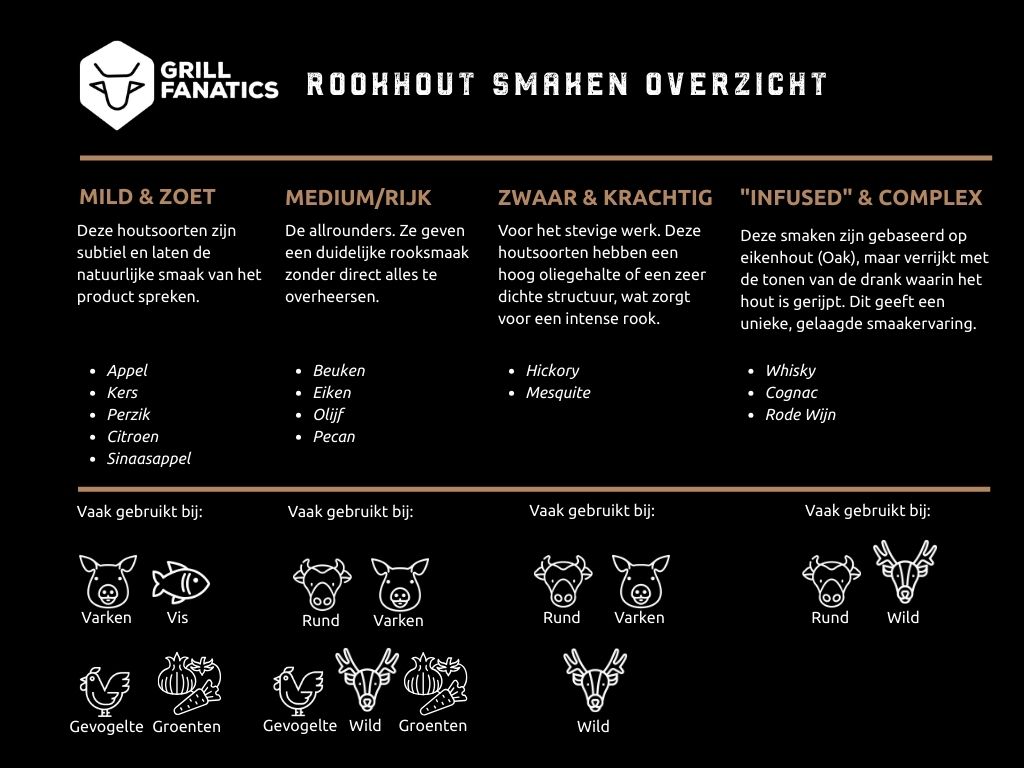
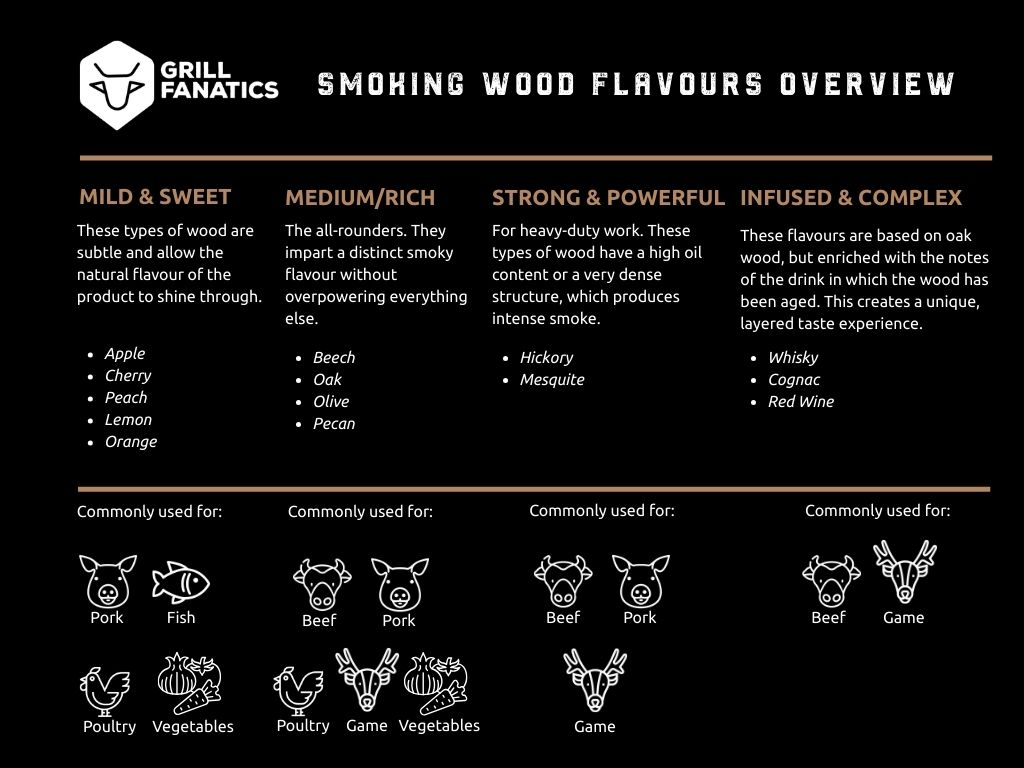
Now that you know when and how to use smoking wood, the most important question remains: which flavour should you choose? Each type of wood has its own character. While fruit trees provide a mild, sweet touch, classic hardwoods give a more robust flavour that goes perfectly with heavier meats. To help you make the perfect match, we have put together a handy overview for you.

Download the Grill Fanatics Smoking Wood Overview here, divided into four categories: from mild and fruity to heavy, powerful and even liquor-infused flavours.

Experiment and find your flavour

The beauty of smoking wood is that there are no fixed rules, only guidelines. Some pitmasters swear by the strong flavour of hickory, while others prefer the subtler taste of apple wood.

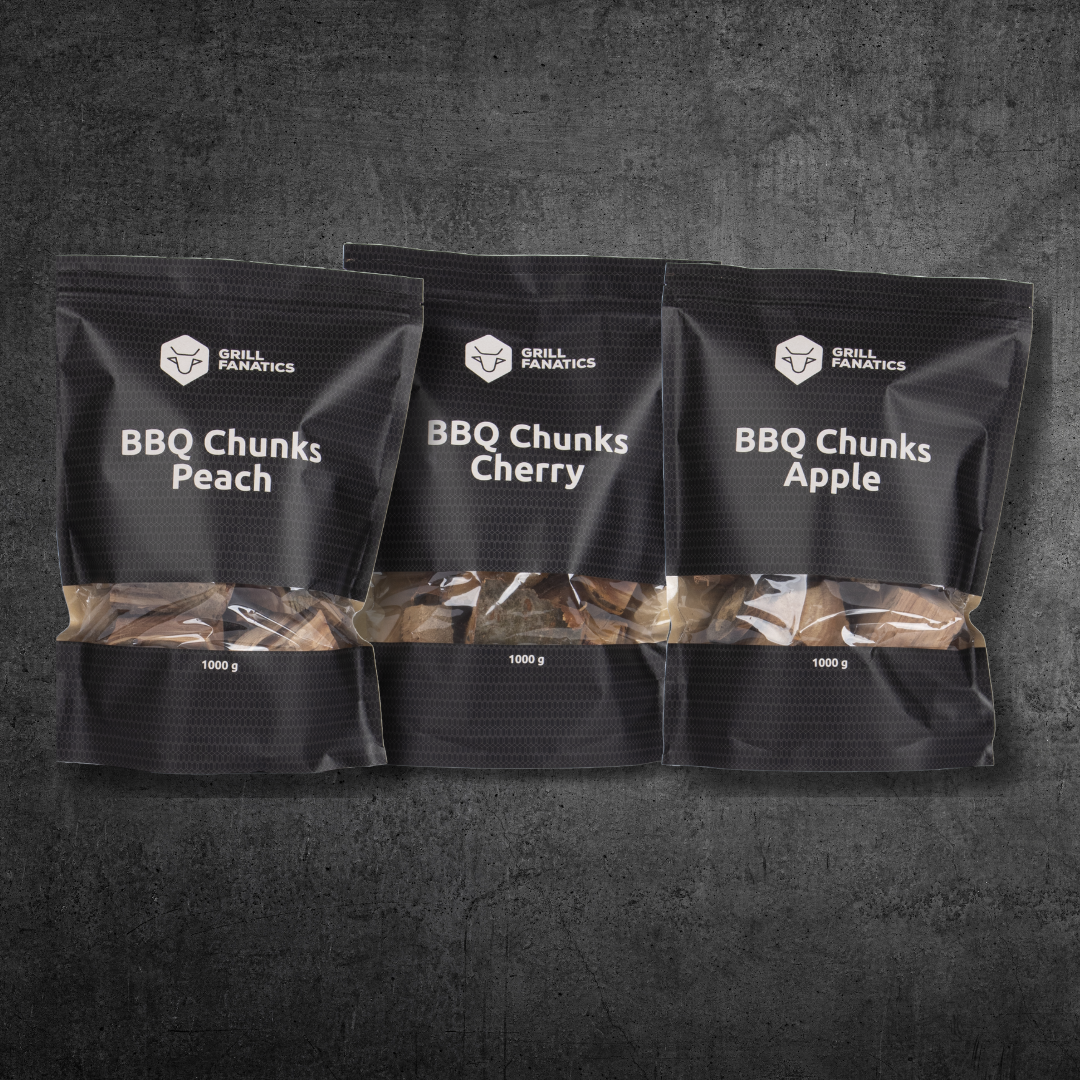
Want to get started with the perfect smoke balance? In our shop, we have a carefully selected range of top-quality smoke chips and chunks.

View our full range of smoking wood here and upgrade your next session!